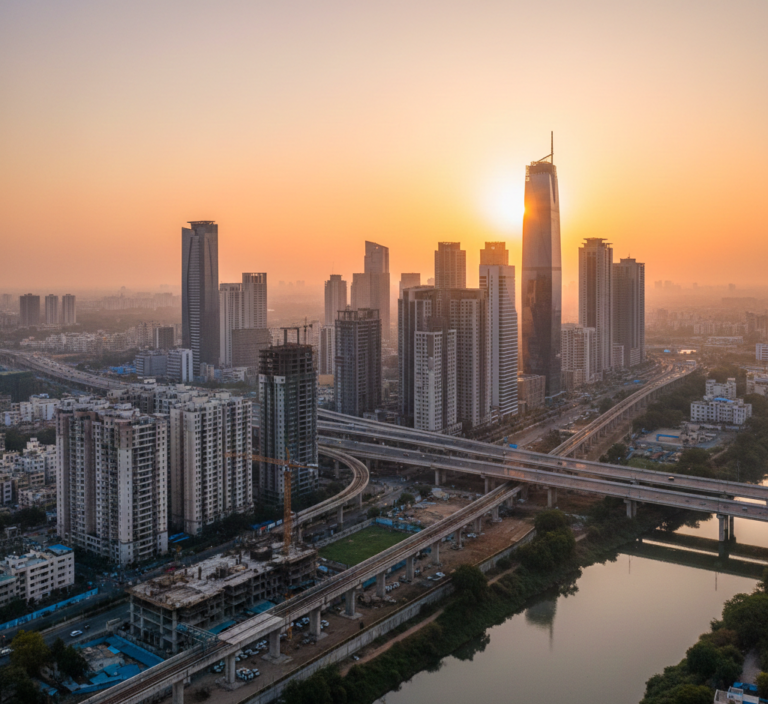
From emerging cities to mega infrastructure corridors, real estate is quietly reshaping India’s economic future
India’s real estate sector has entered a defining phase. What was once seen mainly as a housing-driven industry has evolved into a core economic catalyst, influencing employment, investment, urbanization, and long-term national growth.
In 2026, real estate stands at the crossroads of infrastructure expansion, demographic demand, and policy reform, making it one of the most influential sectors powering the Indian economy.
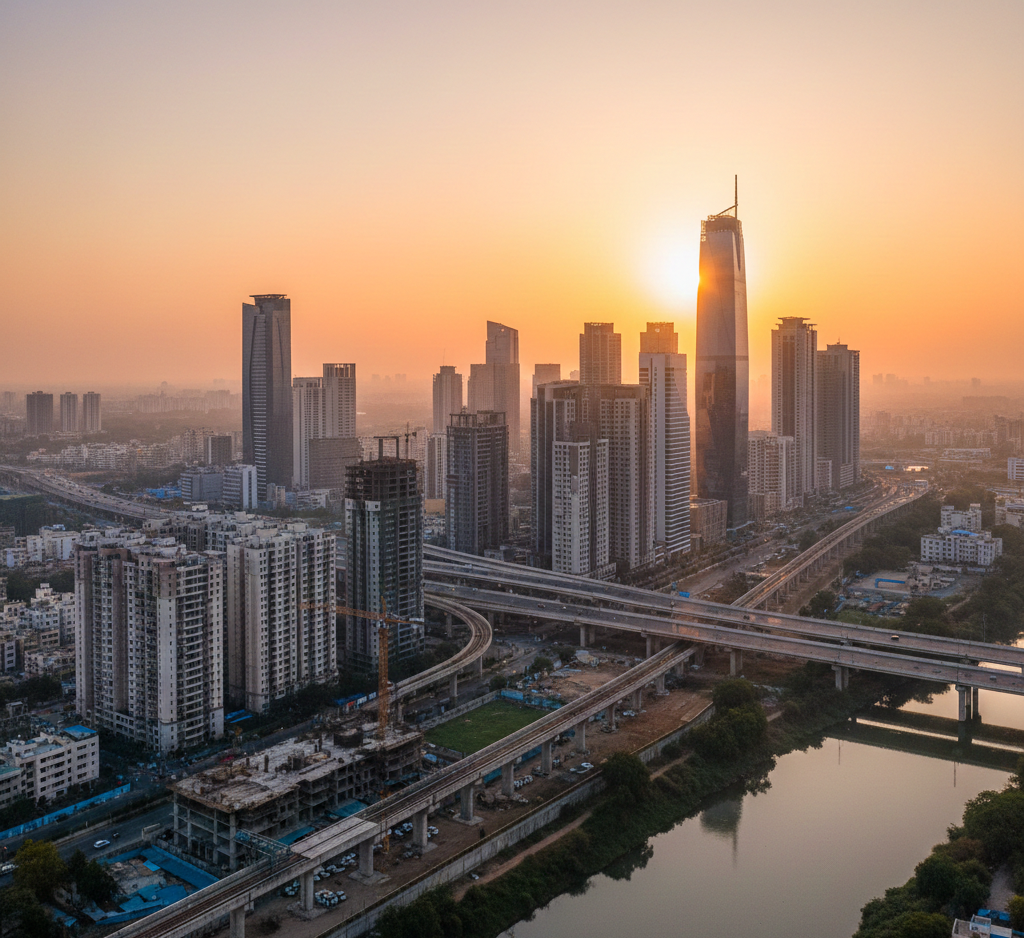
Why Real Estate Matters More Than Ever
Real estate is no longer just about buying or selling property. It supports a vast network of industries — construction materials, finance, transport, interior design, legal services and technology — creating a multiplier effect across the economy.
Today, the sector contributes close to one-tenth of India’s economic output, and its share is steadily rising as cities expand and new growth centres emerge. With India’s urban population increasing rapidly, demand for housing, offices, retail spaces and logistics hubs continues to surge.
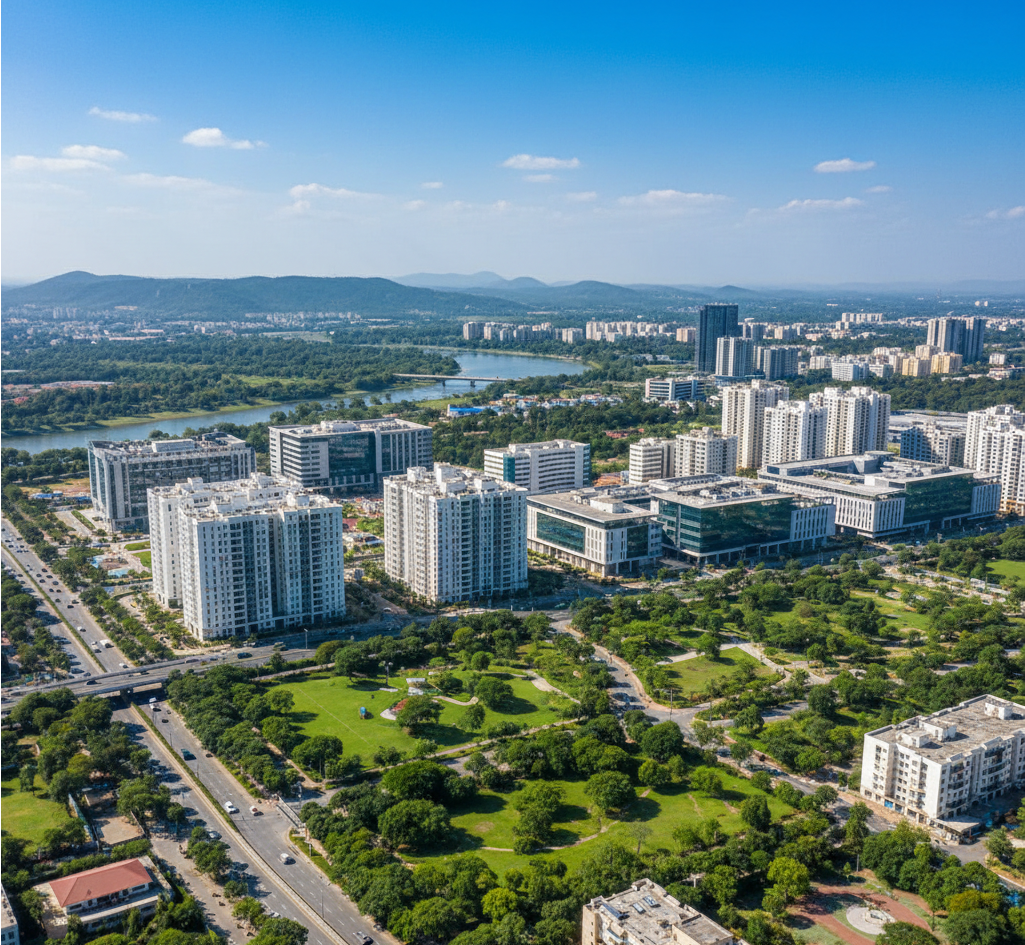
Growth in Numbers: A Sector on the Rise
India’s real estate market is witnessing strong, sustained growth, driven by both residential and commercial demand.
- Annual growth rate: 8–10% across key urban markets
- Residential sales growth in top cities: High single to double digits
- Commercial leasing growth (offices & warehousing): Strong expansion led by IT, startups and global firms
This momentum is supported by rising household incomes, easier access to home loans and growing confidence among domestic and global investors.
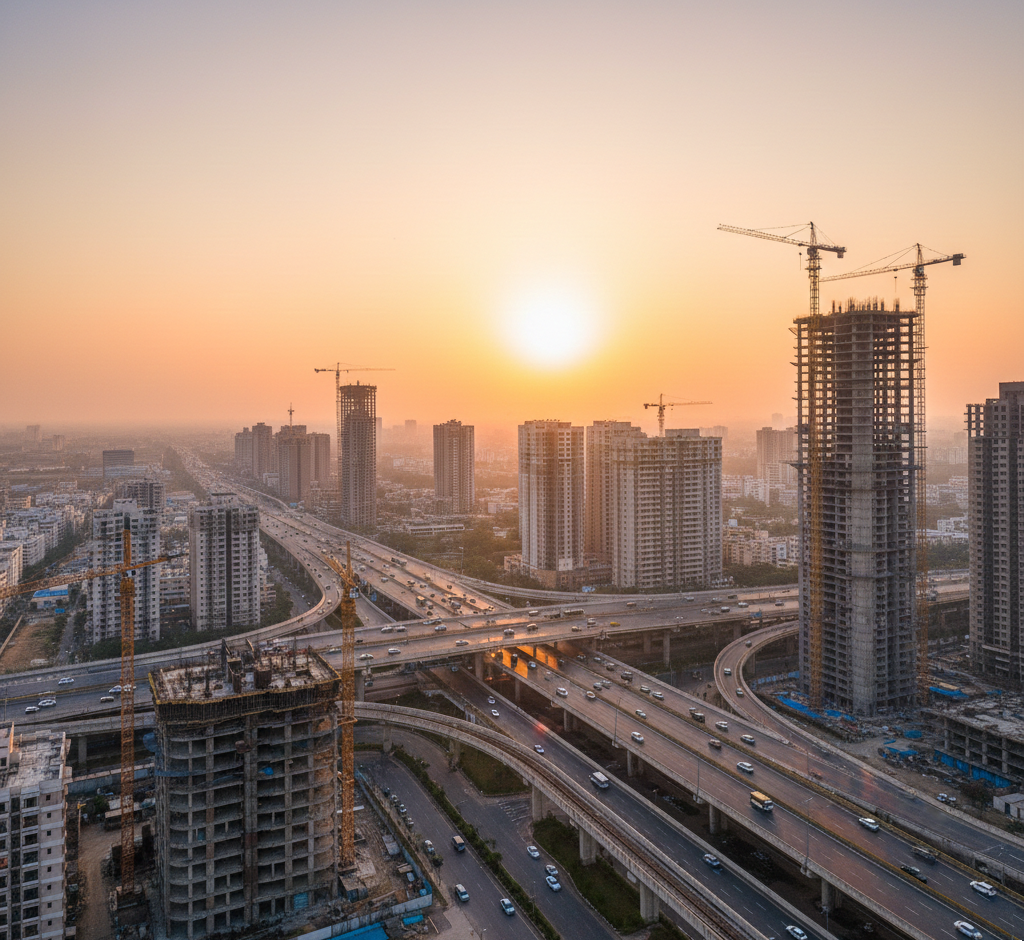
Employment and Economic Impact
Real estate is one of India’s largest job creators, supporting millions of workers directly and indirectly. From construction labour and engineers to architects, brokers, IT professionals and facility managers, the sector sustains livelihoods across skill levels.
Each new project injects spending into the local economy, increasing demand for goods and services and strengthening urban consumption patterns.
Investment Confidence and Market Stability
Institutional investors, private equity funds and long-term asset managers are increasingly viewing Indian real estate as a stable, high-potential investment destination.
The rise of professionally managed commercial assets, transparent regulations and growing interest in rental income models have strengthened trust in the sector. This steady inflow of capital plays a crucial role in funding large-scale developments and improving project quality.
Why Real Estate Is Crucial for India’s Future Growth
Real estate supports India’s long-term economic vision in multiple ways:
- Urbanisation: Accommodates the growing population moving to cities
- Infrastructure Growth: Encourages development of roads, metros and utilities
- Financial Stability: Strengthens banking, housing finance and capital markets
- Social Impact: Improves living standards through better housing and amenities
As India aims to become a multi-trillion-dollar economy, real estate will remain a foundational pillar supporting that ambition.
Key Locations Driving the Property-Led Economic Push
📍 Mumbai Metropolitan Region (MMR): Infrastructure-Led Expansion
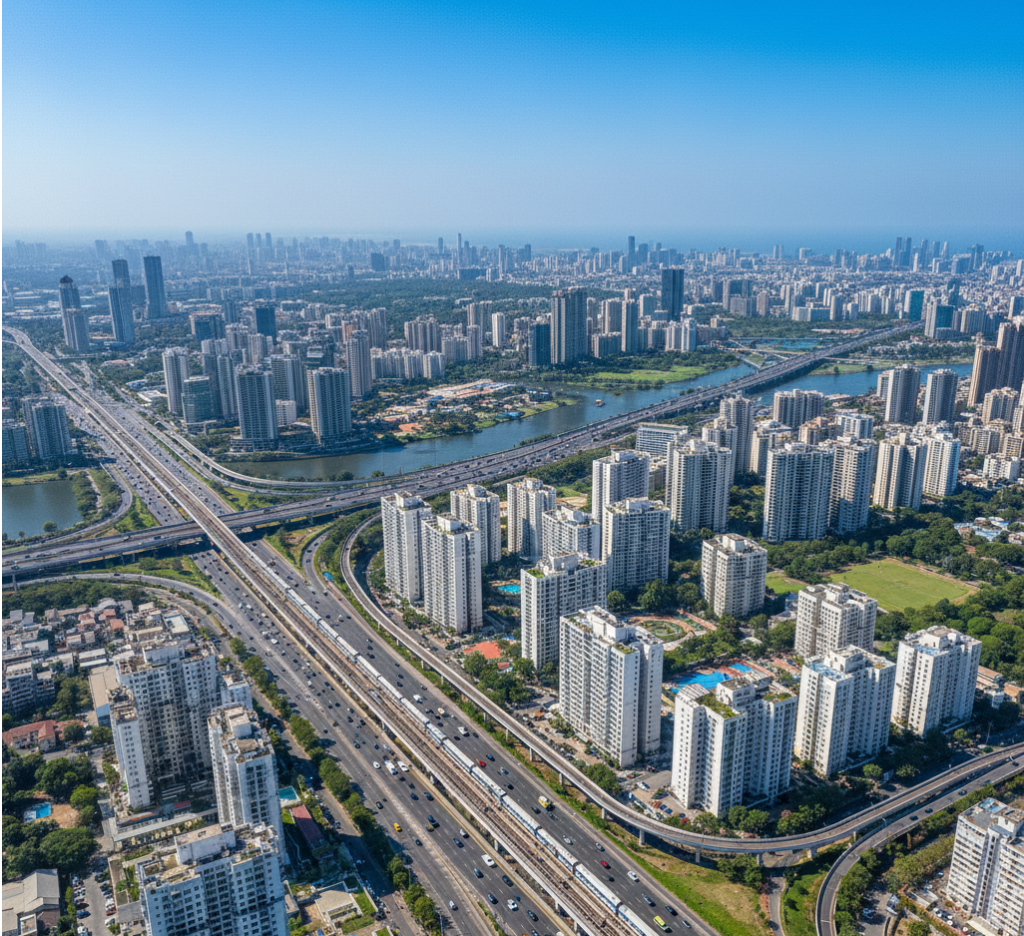
The Mumbai Metropolitan Region remains a powerhouse of real estate activity. Areas such as Thane, Navi Mumbai, Panvel and the extended suburbs are benefiting from new metro lines, expressways and business hubs.
Property values in select micro-markets have grown by 6–9% annually, while demand continues to rise due to improved connectivity and employment opportunities.
📍 Bhubaneswar: A Fast-Growing Eastern Hub
Bhubaneswar has quietly transformed into one of India’s most promising real estate markets. Known for planned development and affordability, the city has attracted IT parks, education institutions and government-backed infrastructure projects.
Over the past decade, residential prices in key zones have seen above-average appreciation, supported by stable demand and improved urban planning.
📍 Tier-II and Tier-III Cities: The New Growth Engines
Cities such as Indore, Coimbatore, Jaipur, Kochi, Lucknow and Surat are now drawing strong interest from developers and buyers alike.
Key reasons behind their rise:
- Lower land and housing costs
- Improved road, rail and airport connectivity
- Government-led urban development programmes
- Remote working and decentralised business models
These cities are recording 7–10% annual property growth, while also creating local employment and reducing migration pressure on major metros.
Conclusion: Building More Than Just Cities
India’s real estate story in 2026 is about more than buildings — it is about economic resilience, opportunity and transformation. From metro corridors to emerging regional hubs, the sector is enabling growth that touches every layer of society.
As infrastructure improves and confidence deepens, real estate will continue to shape how India lives, works and grows — one city at a time.
About the Author