Introduction: Your Dream Car Could Be Your Biggest Financial Mistake!
You have been saving for years. Your salary has increased, your investments are growing, and finally, you decide to reward yourself with that beautiful new SUV sitting in the showroom.
The salesperson offers an attractive deal:
-
- Attractive monthly EMI.
-
- Minimal down payment.
-
- Free accessories.
-
- Extended warranty.
-
- Special festive discounts.
Everything looks perfect. You sign the agreement, drive home your dream car, and enjoy the excitement.
But here is something most car buyers realise too late:
The actual cost of owning a car is much higher than the price you see on the showroom quotation.
Between depreciation, loan interest, insurance, fuel, servicing, repairs and opportunity cost, your dream car could quietly consume several lakhs of your hard-earned money.
And the biggest mistake? Most people make their buying decision based on one question:
Can I afford the EMI?
The smarter question is:
Can I afford this car without compromising my long-term financial goals?
In 2026, buying a car should not simply be about choosing the right brand, model or variant. It should be about making a financially intelligent decision.
Let’s explore seven practical strategies that can help you enjoy your dream car while keeping your financial future on track.
1. Stop Looking at EMI. Start Calculating the REAL Cost of Your Car!
One of the biggest traps in the automobile industry is the obsession with monthly EMI.
A salesperson might tell you that a ₹15 lakh car is available for just ₹18,000 per month. Sounds affordable, right?
But what happens when you add the other expenses?
Consider these costs before purchasing:
| Expense | What You Should Consider |
|---|---|
| Depreciation | Reduction in resale value over time |
| Loan interest | Total interest paid to the bank or NBFC |
| Insurance | Annual premium and add-on covers |
| Fuel | Monthly petrol, diesel or charging expenses |
| Maintenance | Scheduled servicing and repairs |
| Registration | Road tax and registration charges |
| Opportunity cost | Returns you could have earned by investing your money |
This is called the Total Cost of Ownership (TCO).
A simple formula:
Total Cost of Ownership = Purchase Price + Interest + Insurance + Fuel + Maintenance + Other Costs – Resale Value
For a more complete financial analysis, also consider the potential investment returns lost on the money used for your down payment.
A practical example
Suppose you purchase a car for ₹15 lakh and own it for five years.
| Particulars | Illustrative Amount |
|---|---|
| On-road purchase price | ₹15,00,000 |
| Loan interest over ownership period | ₹2,00,000 |
| Insurance over five years | ₹1,25,000 |
| Fuel expenses | ₹4,00,000 |
| Maintenance and repairs | ₹1,00,000 |
| Resale value after five years | (-) ₹7,00,000 |
| Net ownership cost | ₹16,25,000 |
Your ₹15 lakh car has effectively cost you ₹16.25 lakh over five years, excluding the opportunity cost of your down payment.
That is the number you should be evaluating, not just your monthly EMI.
Smart Money Tip: Before finalising a car, calculate its five-year ownership cost. A slightly expensive vehicle with better resale value, fuel efficiency and lower maintenance costs may prove more economical than a cheaper alternative.
2. The Biggest Car Buying Secret: Let Someone Else Pay for the Initial Depreciation!
Here is an interesting fact about buying a brand-new car.
The moment you purchase and register a new vehicle, its resale value generally starts declining. The initial years can bring a particularly significant drop in value.
This is why buying a two- or three-year-old vehicle can sometimes be a financially smarter decision.
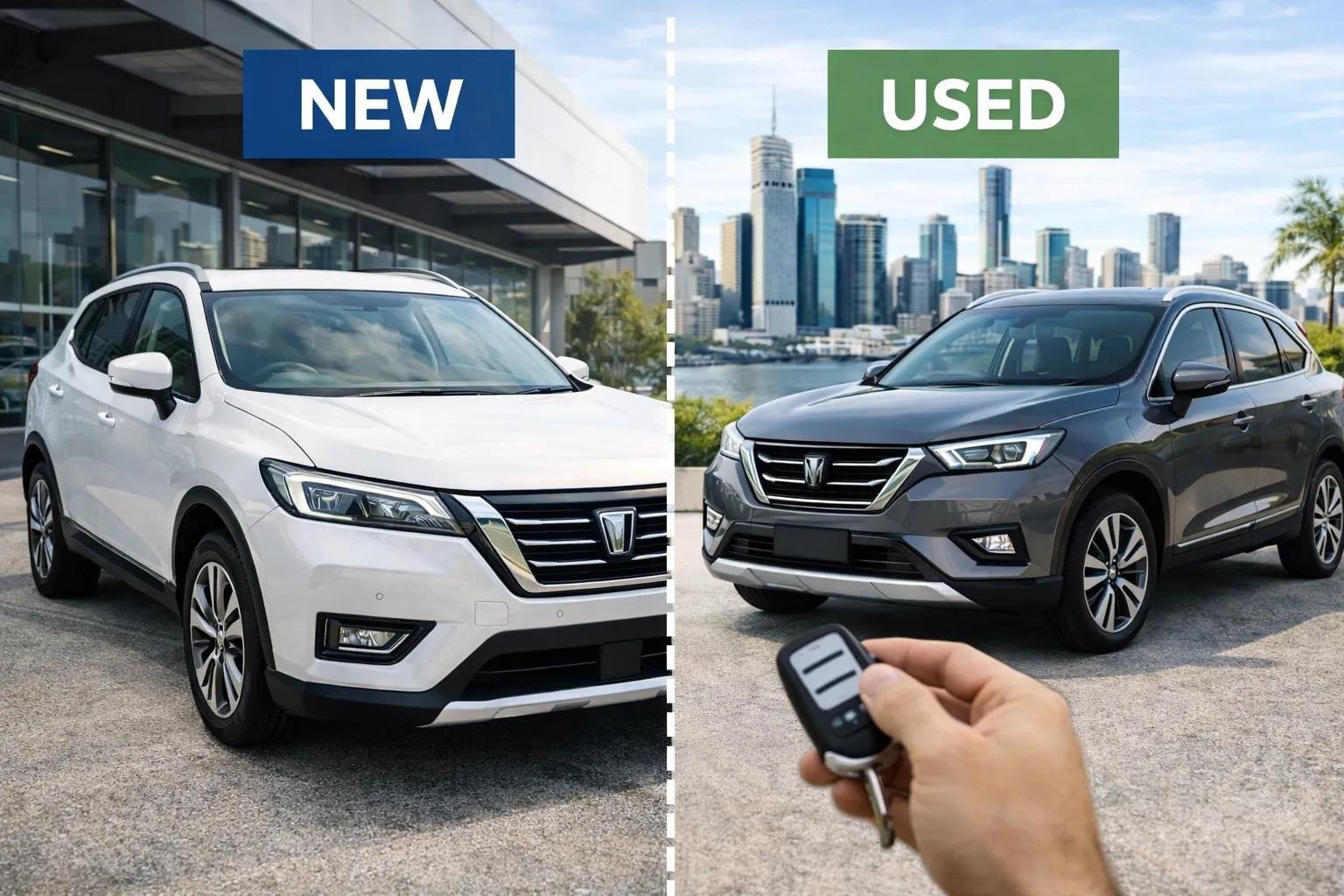
New Car vs 2–3-Year-Old Used Car
Imagine two buyers:
-
Buyer A purchases a brand-new vehicle for ₹15 lakh.
-
Buyer B purchases a similar two-year-old vehicle for ₹10.5 lakh.
Both buyers get a relatively modern vehicle, but Buyer B has potentially avoided a significant portion of the initial depreciation.
<Insert Image: New car versus pre-owned car comparison>
Why consider a nearly new car?
-
Lower purchase price: You may avoid much of the initial depreciation.
-
Better value for money: You could potentially purchase a higher variant within the same budget.
-
Lower initial capital requirement: You may need a smaller loan.
-
Modern features: A two- or three-year-old car may still offer modern safety, technology and comfort features.
But is buying a new car always a bad decision?
Absolutely not!
Buying new may be financially attractive when:
-
The manufacturer offers substantial discounts.
-
Promotional financing reduces the effective borrowing cost.
-
Used-car prices are unusually high.
-
You intend to keep the vehicle for 8–10 years.
-
You want complete ownership history and a full manufacturer warranty.
The winning strategy: Compare the actual on-road price of a new car with the purchase price, insurance, expected repairs and resale value of a pre-owned vehicle.
Never assume that used automatically means cheaper.
If you save ₹25,000 every month:
| Period | Total Savings (Without Returns) |
|---|---|
| 12 months | ₹3,00,000 |
| 18 months | ₹4,50,000 |
| 24 months | ₹6,00,000 |
| 36 months | ₹9,00,000 |
Imagine having ₹6 lakh ready for your next car instead of starting another five-year loan from zero.
You could:
-
Purchase a more affordable vehicle.
-
Reduce your monthly EMI.
-
Negotiate a better deal with the dealer.
-
Avoid unnecessary interest payments.
-
Preserve more of your monthly income for investments.
The real wealth-building secret is not upgrading your car every few years. It is upgrading your financial position before upgrading your car.
4. Car Loan Strategy: Don’t Let a Small EMI Become a Big Financial Burden!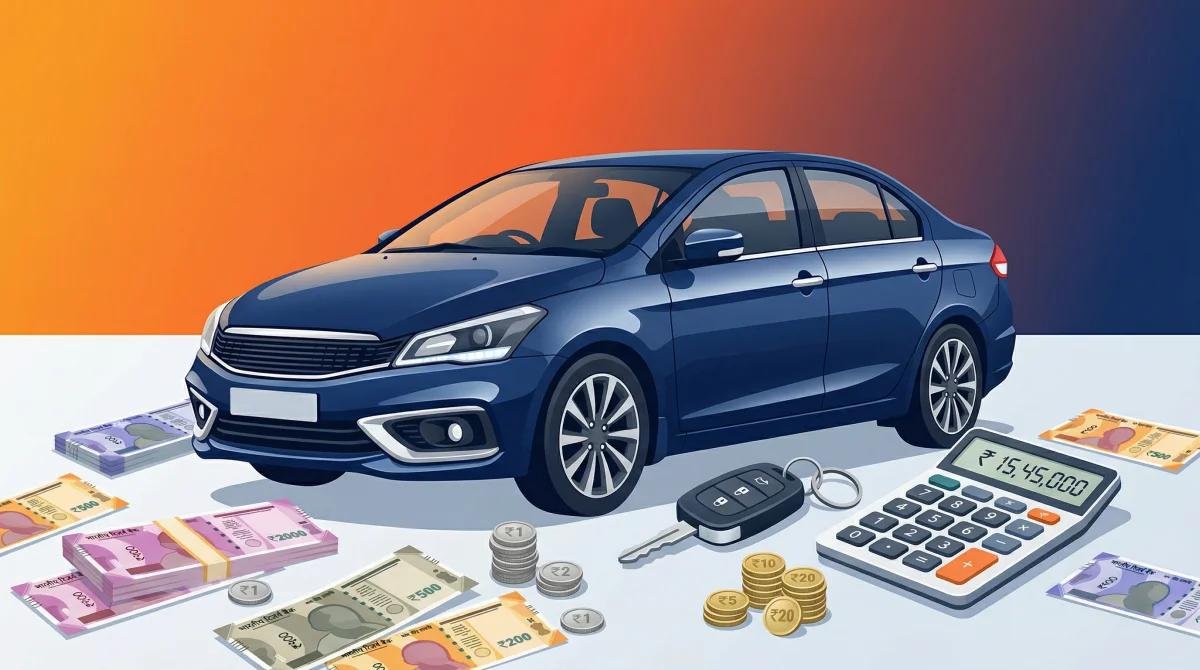
Car loans make expensive vehicles look affordable.
However, a longer loan tenure can significantly increase your total interest expenditure.
Consider an illustrative car loan of ₹10 lakh at 9% annual interest.
| Loan Tenure | Approx. Monthly EMI | Approx. Total Interest |
|---|---|---|
| 3 Years | ₹31,800 | ₹1.45 lakh |
| 4 Years | ₹24,900 | ₹1.95 lakh |
| 5 Years | ₹20,760 | ₹2.46 lakh |
| 7 Years | ₹16,090 | ₹3.51 lakh |
Illustrative calculations; actual rates, fees and EMI amounts depend on the lender.
Notice something interesting?
A seven-year loan makes the EMI look significantly smaller, but you end up paying substantially more interest.
Five smart car loan rules
1. Make a meaningful down payment
Aim for at least 20% of the on-road purchase price, provided you can do so without exhausting your emergency fund.
2. Prefer shorter loan tenures
A three- to four-year loan is generally a better starting point if your income comfortably supports the EMI.
3. Compare interest rates
Check offers from multiple banks and NBFCs. Compare the effective borrowing cost, processing fees and other charges.
4. Check foreclosure and part-payment conditions
Some loans have restrictions or charges on early repayment. Understand these before signing.
5. Avoid financing unnecessary accessories
Do not increase your loan amount for expensive accessories or add-ons that you can comfortably purchase separately.
Remember: The best car loan is not necessarily the one offering the lowest EMI. It is the one with the lowest reasonable overall borrowing cost and manageable repayment obligations.
5. Insurance Hack: The Small Add-on That Could Protect You From a Massive Financial Loss!
Most buyers spend hours comparing car models but hardly spend 30 minutes understanding their insurance policy.
That can be an expensive mistake.
Imagine purchasing a brand-new car for ₹15 lakh using a combination of savings and a bank loan.
Unfortunately, within a year, the vehicle is involved in a major accident and is declared a total loss.
Your standard comprehensive insurance policy generally considers the vehicle’s insured declared value (IDV), subject to the policy terms.
The problem?
The insurance payout may be substantially lower than the original purchase price. If you still have an outstanding car loan, you could face a financial gap.
What is Return to Invoice (RTI) cover?
Return to Invoice is an optional motor insurance add-on that can help bridge the difference between the insured vehicle’s IDV and its original invoice value, subject to policy conditions.
Depending on the insurer and policy wording, eligible benefits may also include certain registration charges and road tax.
Why should new-car buyers consider RTI?
-
Helps protect against a significant depreciation-related insurance shortfall.
-
Can reduce the financial burden following eligible total-loss or theft claims.
-
Particularly useful for expensive new vehicles and financed purchases.
Other insurance considerations
| Insurance Cover | Why It Matters |
|---|---|
| Zero Depreciation | Helps reduce depreciation deductions on eligible parts claims |
| Return to Invoice | Helps bridge the IDV-to-invoice gap in eligible cases |
| Engine Protection | Covers specified engine-related damage, subject to exclusions |
| Roadside Assistance | Provides assistance during breakdowns |
| Consumables Cover | Covers specified consumables during eligible repairs |
Smart Money Tip: Compare insurance quotations from multiple insurers. Do not purchase expensive dealer-bundled add-ons without understanding their actual benefits, exclusions and claim conditions.
6. Should You Buy a Car With Cash or Take a Loan and Invest the Money?
This is one of the most interesting financial decisions when buying a vehicle.
Suppose you have ₹10 lakh available in your bank account.
You have two options:
Option A: Pay ₹10 lakh upfront and purchase the car without a loan.
Option B: Make a down payment and finance the remaining amount while retaining some money for investments.
Which is financially better?
The answer depends on the effective cost of borrowing, your investment returns, risk tolerance and liquidity requirements.
The Opportunity Cost Test
Consider this simple comparison:
| Particulars | Option A | Option B |
|---|---|---|
| Car loan | Nil | ₹5,00,000 |
| Loan interest rate | Nil | 9% |
| Cash retained | Lower | Higher |
| Interest expenditure | Nil | Applicable |
| Investment opportunity | Lower | Higher |
If your investments generate returns greater than the effective cost of your car loan, financing may appear attractive.
However, there is an important catch.
A guaranteed loan interest expense should not be compared directly with an uncertain market investment return.
For example, an equity investment might generate 12% in one year and lose 15% in another.
Therefore:
-
If the loan interest rate is higher than the return available from safe investments, reducing the loan is generally sensible.
-
If you have access to genuinely low-cost financing and can retain sufficient liquidity, a loan may be worth considering.
-
Never invest your emergency fund in volatile assets simply to avoid making a larger down payment.
For personal-use vehicles in India, also remember that car loan interest generally does not qualify for a personal income-tax deduction. Different rules may apply when a vehicle is used for business or professional purposes.
The objective is not to maximise borrowing. It is to maximise your financial flexibility without taking unnecessary risks.
7. The 20/4/10 Rule Is Good, But Here’s a More Practical Indian Financial Rule!
You may have heard about the popular 20/4/10 car-buying rule.
It recommends:
-
20% down payment.
-
Maximum four-year loan tenure.
-
Total vehicle expenses within 10% of gross monthly income.
It is a useful starting point, but financial circumstances vary from person to person.
A salaried employee with a home loan, family responsibilities and existing investments may need a different budget from a business owner with substantial savings and no debt.
Our suggested car affordability framework
| Financial Parameter | Suggested Guideline |
|---|---|
| Down payment | 20% or more, without exhausting emergency savings |
| Loan tenure | Preferably 3–4 years |
| Total vehicle expenses | Target 10–15% of monthly take-home income |
| Emergency fund | Maintain 6–12 months of essential expenses |
| Existing debt | Consider home loans, personal loans and other EMIs |
| Investment goals | Do not sacrifice retirement or long-term investments |
These are planning guidelines, not universal financial rules.
Example: What car can you afford on a ₹1 lakh monthly salary?
Suppose your monthly take-home income is ₹1,00,000.
A sensible vehicle budget could look like this:
| Particulars | Monthly Budget |
|---|---|
| Car EMI | ₹12,000 |
| Fuel | ₹4,000 |
| Insurance provision | ₹1,500 |
| Maintenance provision | ₹1,500 |
| Total Vehicle Budget | ₹19,000 |
This represents 19% of your monthly take-home income.
You may find this comfortable if you have limited liabilities, but it could become financially stressful if you also have a home loan or significant family expenses.
The lesson is simple:
Buy a car based on your financial capacity, not your bank’s loan eligibility.
Final Verdict: The Smartest Car Buyers Think Like Investors!
Buying a car is an emotional decision. There is nothing wrong with wanting a premium SUV, a luxury sedan or your dream automobile.
But a financially intelligent buyer knows the difference between purchasing a vehicle for personal satisfaction and making a decision that damages long-term wealth creation.
Before booking your next car, remember these seven principles:
-
Calculate total ownership cost: Never evaluate a vehicle based on EMI alone.
-
Understand depreciation: Compare new and nearly new vehicles before purchasing.
-
Build a replacement fund: Continue saving even after your existing car loan is closed.
-
Choose smart financing: Avoid unnecessarily long loan tenures.
-
Protect your purchase: Understand RTI and other relevant insurance covers.
-
Evaluate opportunity cost: Compare borrowing costs with realistic, risk-adjusted investment returns.
-
Set a personal affordability limit: Your car should complement your financial goals, not compete with them.
A car should make your life more comfortable, not your financial future more complicated.
The real luxury is not driving a ₹30 lakh car. The real luxury is being able to afford it without compromising your investments, savings or financial freedom.
Frequently Asked Questions (FAQs)
1. What is the 20/4/10 rule for buying a car?
The 20/4/10 rule suggests making a 20% down payment, choosing a maximum four-year loan tenure and keeping total vehicle expenses within 10% of gross monthly income. It is a general budgeting guideline rather than a mandatory financial rule.
2. Is it better to buy a new car or a second-hand car in India?
A two- or three-year-old used car may offer better value because the initial depreciation has already been absorbed by the previous owner. However, vehicle condition, service history, warranty, resale value and current market pricing must be considered.
3. Is buying a car on EMI a good financial decision?
A car loan can be useful when it preserves sufficient liquidity and the EMI is comfortably affordable. However, borrowing excessively or choosing long repayment periods can increase your overall ownership cost.
4. How much of your salary should go towards a car EMI?
There is no universal limit. As a practical starting point, consider keeping the entire vehicle budget, including EMI, fuel, insurance and maintenance, within 10–15% of your take-home income, subject to your existing liabilities.
5. What is Return to Invoice (RTI) insurance?
RTI is an optional motor insurance add-on that helps bridge the difference between the vehicle’s insured declared value and its original invoice value in eligible total-loss or theft claims, subject to policy conditions.
6. How long should you keep a car before upgrading?
There is no fixed period. Keeping a reliable vehicle longer can help avoid repeated depreciation, transaction costs and new loan interest. The decision should depend on maintenance expenses, reliability, safety and your actual transportation requirements.
Disclaimer: This article is intended for general financial education and awareness. Depreciation, resale value, loan rates, insurance benefits and vehicle ownership expenses vary depending on the vehicle, insurer, lender and individual circumstances. Readers should evaluate their financial position and review applicable policy and loan terms before making a purchase.